Showing posts with label Patrick Rothfuss. Show all posts

Tuesday, October 6, 2015

Review: The Magicians by Lev Grossman

Title: The Magicians

Author: Lev Grossman

Information on series:  The Magicians: Book 1

Audience: Adult

Rating (scale of 1-5, with 5 being highest): 4

TL;DR: A character driven contemporary fantasy about  a high schooler who knows some magic tricks that suddenly finds himself admitted to a mysterious school of magic.

Longer review:
Quinten Coldwater, grew up enjoying a series of books about a magical make believe land called Fillory. Fillory is very similar C.S. Lewis’ Narnia. Quintin is thrilled when he is invited to join a University for magicians. Quintin excels in school but loses his innocence when a prank allows an evil being to enter the University. Quintin and his former classmates find out that Fillory is real and their skills are put to the test when they travel there.

I listened to the book and I really liked the reader.  I loved Lewis’ Chronicles of Narnia as a child so I loved the fact that Quintin could actually visit Fillory.

Readalikes:
The Wicked Years series by Gregory Maguire. This series is also a character driven fantasy that re-imagines a fictional world.

The Kingkiller Chronicle series by Patrick Rothfuss. Although Rothfuss’ books take place in a different time, late medieval Europe, the main characters go to wizarding/magician school and along the way lose their innocence when they discover evil.

Running with the Demon by Terry Brooks. Both books deal with magic but they also both deal with the age-old theme, good vs evil.

Wednesday, July 22, 2015

Review: Name of the Wind by Patrick Rothfuss

Title: Name of the Wind
Author: Patrick Rothfuss
Information on series: Part 1 of the Kingkiller Chronicles, an incomplete trilogy.
Audience: Adult
Rating (scale of 1-5, with 5 being highest): 5

TL;DR: A talented and charismatic hero takes his first steps toward greatness, power, and a dark destiny.

I may have my nerd-card revoked for admitting this, but I have an astonishingly hard time finding fantasy novels that I can tolerate, let alone like. I don’t dislike the genre. I’ve played Dungeons & Dragons for years and am more than happy hold forth on gnomish subspecies or the relative merits of wizardry and sorcery (in fact, every time I go to the reference desk I’m secretly hoping that today will be the day someone comes in with a meaty question about orcs or displacer beasts). After some consideration, I’ve determined that the problem is usually one of tone. Many authors seem to confuse “epic” with “self-serious.” Others veer in the opposite direction and produce novels that are just long strings of dwarf and elf jokes. In The Name of the Wind, Patrick Rothfuss strikes a refreshing balance between dour and frivolous and spins an engrossing tale of monsters, magic, and intrigue.

As the book opens, we learn that the main character, Kvothe, is a man of legendary power, known by such awed appellations as “Kvothe the Bloodless,” “Kvothe the Arcane,” and “Kvothe Kingkiller.” However, fate has turned against him and, following some undisclosed calamity, he’s holed up in a backwater hamlet waiting to die. When he’s discovered by a collector of legends, Kvothe agrees to relate his story and the book takes off, careening through forests, alleys, taverns, and palaces, detailing the creation and destruction of a hero.

The story that follows definitely prioritizes atmosphere and narrative voice. Rothfuss doesn’t aim for action movie pacing, but instead takes his time building complicated characters in a fully realized world. Plot elements move into place slowly and deliberately, forming a complex structure.

Rothfuss balances self-importance and self-effacement in a very concrete and effective manner. The young Kvothe of the main story is clever and ambitious, convinced of his own brilliance and eager to prove it to the world. At the same time, the older Kvothe of the framing story is all too aware of the tragic folly of his younger days and undercuts the heroics with a wry fatalism. This duality is riveting, drawing the reader in for both the vicarious thrill of success and the train-wreck voyeurism of defeat.

Not that anyone knows the full extent of Kvothe’s power or the exact nature of his downfall. The Name of the Wind is the first book of a trilogy. The second book, The Wise Man’s Fear, was published in March of 2011. The final book, tentatively titled The Doors of Stone, doesn’t have a release date and can’t come soon enough.

Read alikes:
The Magicians by Lev Grossman: Another trilogy-opener in which a powerful hero heads off to a magic academy. Good for the many fantasy readers who like that particular vein of world building in which theories of magic are detailed.

The Neverending Story by Micheal Ende: Though written for a younger audience, The Neverending Story may appeal to readers who enjoyed story-within-a-story structure of Name of the Wind and its grand mythic elements.

Ship of Magic by Robin Hobb: For readers looking to delve further into high fantasy. Captain Althea Vestrit fights to protect her magically sentient sailing vessel from pirates and slavers. Hobb’s story unfolds at a leisurely pace, making room for plenty of world-building detail and character development.

Readlikes suggested by Jillian: 


Blood song by Anthony Ryan
The Warded man  by Peter Brett
A lot of Robin Hobb’s other books would appeal, as well.

*back to impatiently awaiting book #3* 

Review by Andrew Fuerste-Henry --Carnegie-Stout Public Library

Thursday, January 8, 2015

Review: Throne of the Crescent Moon by Saladin Ahmed

crescent moon.jpgTitle: Throne of the Crescent Moon


Author: Saladin Ahmed


Information on series: Book 1 of an intended trilogy


Audience: Adult, with probable YA crossover


Rating (scale of 1-5, with 5 being highest): 5


TL;DR: A fast-paced and character-driven high fantasy adventure in a fully realized non-traditional setting.


Longer review: Ahmed has been very successful at a seemingly paradoxical task: he’s written a novel that is at once accessibly familiar and intriguingly unconventional. This book shows exactly why I hate to read debut novels -- I loved it and very much want to read more of his work but there is no more to be found.


The story is set in Dhamsawaat, the greatest city of the Crescent Moon Empire. It is a city of wonders, dangers, opulence, and poverty. While the poor struggle under to rule of a tyrannical Khalif, Doctor Adoulla Makhslood fights more concrete evils. He is a ghul hunter, the last of his order in the city. He battles ghuls, djenn and other magical creatures alongside a small group of allies: a pious swordsman from a holy order of dervishs, an orphaned nomadic tribeswoman with shape-changing powers, and a magus and an alchemist, both old friends of the doctor’s who’ve tried to retire from the adventuring life. As the story unfolds, a powerful new threat comes to light and the heroes are forced to question their hopes, ideals, and relationships. This is definitely more of a fantasy adventure than an epic fantasy. The plot moves quickly, with frequent action sequences. Ahmed does not dwell on politics, armaments, fashion, or cuisine as Tolkien or Martin might.


The tropes and plot points of this book will be familiar to most readers of fantasy. That familiarity works well here, providing an accessible structure upon which Ahmed can hang his richly detailed world based upon Arabic mythology that is likely to be new to many readers.


The five heroes are very well-imagined, each with their own goals and fears. Ahmed makes the wise choice of switching the focal character with each chapter. This doesn’t generally go so far as to repeat entire scenes from a new point of view, but we get each character’s contrasting views of major plot points and other characters’ actions. Since the characters were such a strong point of the book, I’m happy that Ahmed intends to write more in this world, giving me a chance to spend some more time with them.

As a bit of an aside, I started this as an audio book before finishing it in print. Phil Gigante’s performance was really great and I may seek out more audio books read by him.


Readalikes:


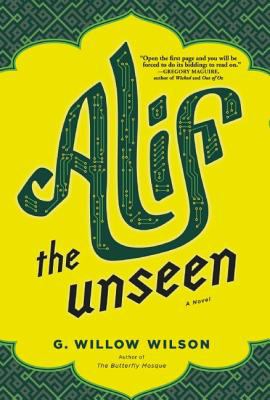
alif.jpg


Alif the Unseen by G. Willow Wilson: For readers looking to continue with the Arabian setting, this urban fantasy plays with technology and magic against the backdrop of the Arab Spring. Wilson's writing is atmospheric and stylistically complex.


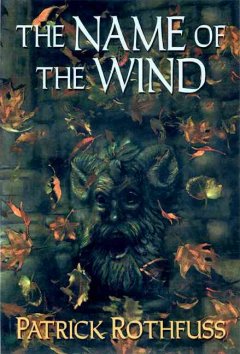
name wind.jpg


The Name of the Wind by Patrick Rothfuss: Like Ahmed, Rothfuss captures the magic and excitement of high fantasy without the gritty mundanity that sometimes creeps into epic fantasy. Charismatic characters and a compelling writing style keep things lively.


Review by: Andrew Fuerste-Henry, Carnegie Stout Public Library