Title: Rat Queens: Sass and Sorcery
Author: Written by Kurtis J. Wiebe, Art by Roc Upchurch
Information on series: Volume 1 of an ongoing series
Audience: Adult. Very adult.
Rating (scale of 1-5, with 5 being highest): 5
TL;DR: A crazy thrill-ride of blood and feminism.
Longer review:
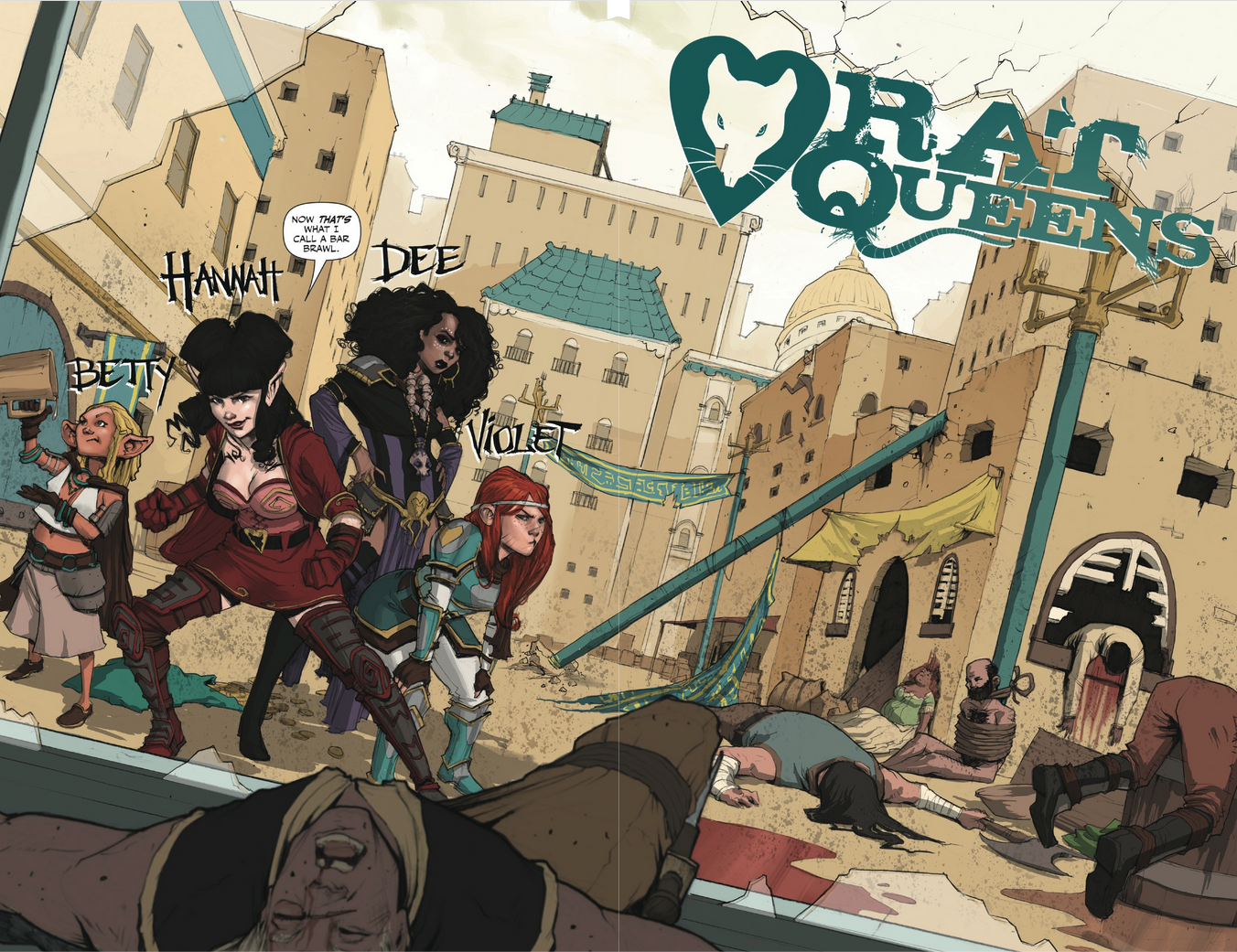
Betty, Dee, Hannah, and Violet are The Rat Queens, a party of brawling, boozing, sexing, swearing adventurers in the vaguely Euro-fantastic town of Palisade. In this first volume, they defeat an army of orcs and save the town. But the orcs were only there because they were friends of an ogre the Rat Queens viciously murdered. But the Rat Queens only murdered the ogre because the mayor of Palisade sent the ogre to kill them. But the mayor only wanted the Rat Queens dead because they kept getting drunk and starting fights. At first glance, it’s hard to figure out who the good guys are.
Ultimately, we end up siding with the Rat Queens for the simple but very compelling reason that they are a band of complex and flawed but sympathetic characters who, despite all other failings, display a sincere and contagious affection for each other. I cannot stress how rare and enjoyable this is. As a rule, filthy, bloody, drug-fueled adventure comics do not feature an all-female case. Or, if they do, the women are adolescent sex fantasies first and actual characters second. And their stories certainly don’t feature a sincere emotional core.
Rat Queens shows a mix of humor, violence, vulgarity, and heart that is absolutely atypical for fantasy comics, and I suspect it had a rough road to publication. But its reception has been great. It was nominated for an Eisner Award for Best New Series in 2014 (that’s essentially an Oscar for comics) and a Hugo for Best Graphic Story in 2015. It also picked up a 2015 GLAAD Media Award for its LGBT representation (that, more than anything else I’ve said, should quiet your worries about whether a comic with this much crass-ness can also manage some compelling character work).
The series has seen a couple artist changes since it started (for a variety of disappointing reasons that I won’t get into here). For this first volume, all the art is by co-creator Roc Upchurch. First off, his character designs are great. He splashes in modern touches like Hannah’s rockabilly-inspired hair, but melds them with more traditional fantasy elements for a good, consistent aesthetic. All four of the Rat Queens are presented as sexy at times, but they’re far from the chainmail bikini cliche of so much fantasy art.
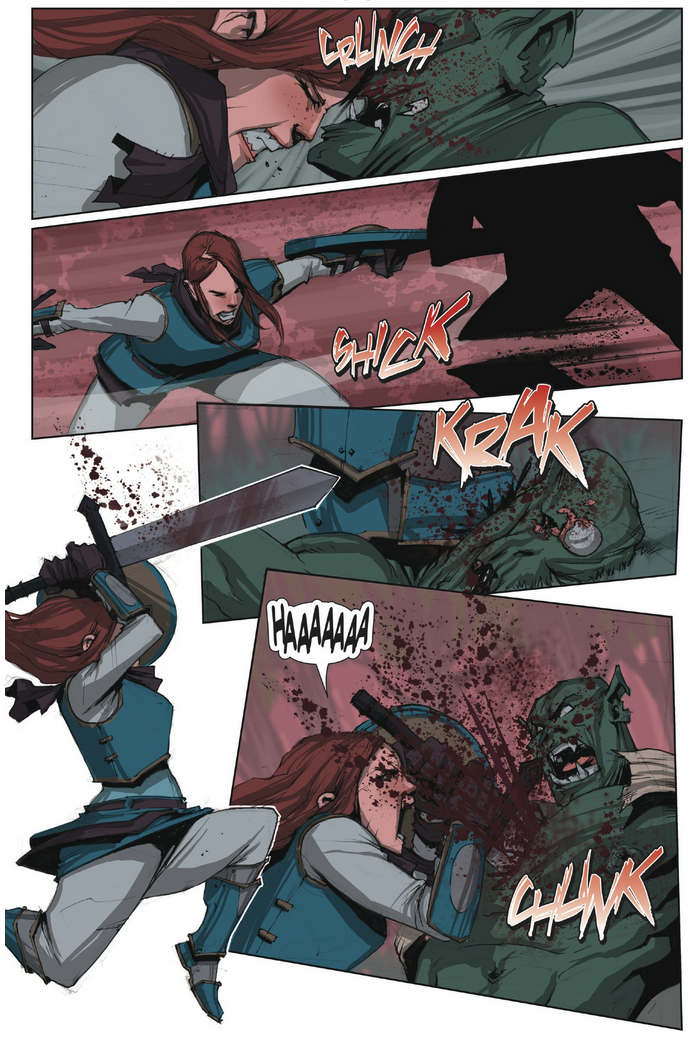
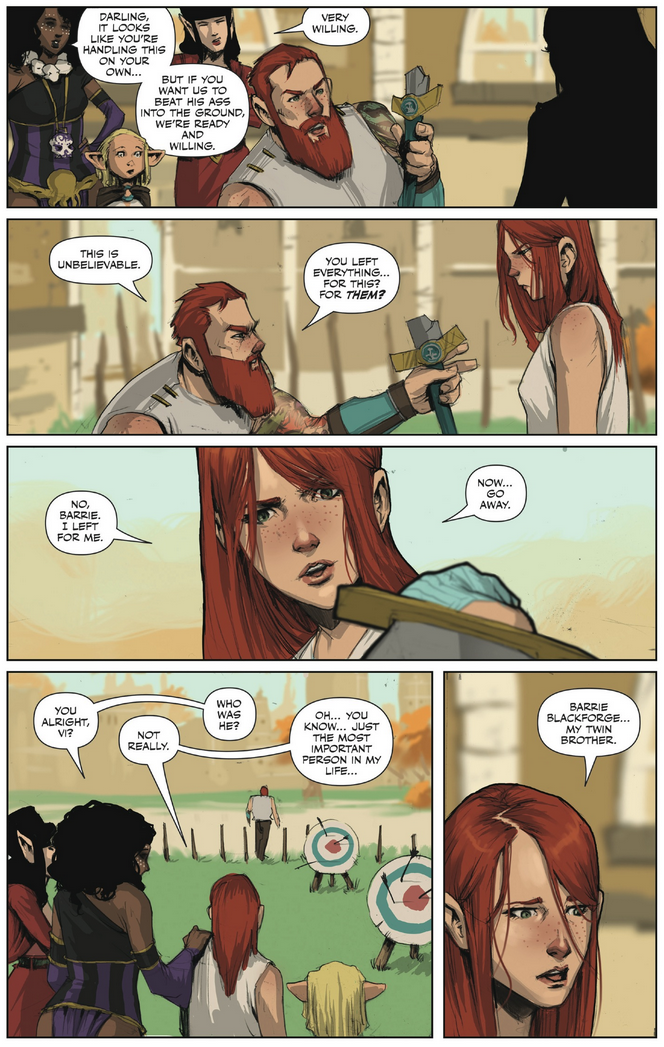
Upchurch also does a good job laying out his pages and staging action. He’s got enough restraint and faith in the writing to stick to a fairly simple panel grid when drawing dialogue, which gives more impact to the times he throws the grid out for a splash page or action sequence. As in a movie, action in comics really falls apart without a visual storyteller who can subtly guide the reader’s eye, making sure the follow the sequence of events.
Read-alikes:
Dungeons & Dragons by John Rogers - This comics series, published by IDW starting in 2010, matches Rat Queens’ sense of fun and adventure, but dials back the adult themes. As you might expect from an official tie-in to a large media property, these comics are very well made but ultimately play it a little safe. Start with volume 1, Shadowplague.
Skullkickers by Jim Zub - An unlikely pair of adventurers seek gold and glory while facing down ever-more strange and deadly foes. Skullkickers matches the weird humor of Rat Queens but loses the emotional core.
Dungeons & Dragons Starter Set by Wizards of the Coast - Not a book so much as a box that contains several booklets, some loose sheets, and an assortment of dice. If you’re this far into fantasy about parties of heroic adventurers, maybe you should just take the plunge and give D&D a try. One of the best things about Rat Queens is the bond of friendship between the four leads. D&D is all about cooperating with your friends to tell grand stories and defeat hideous villains.